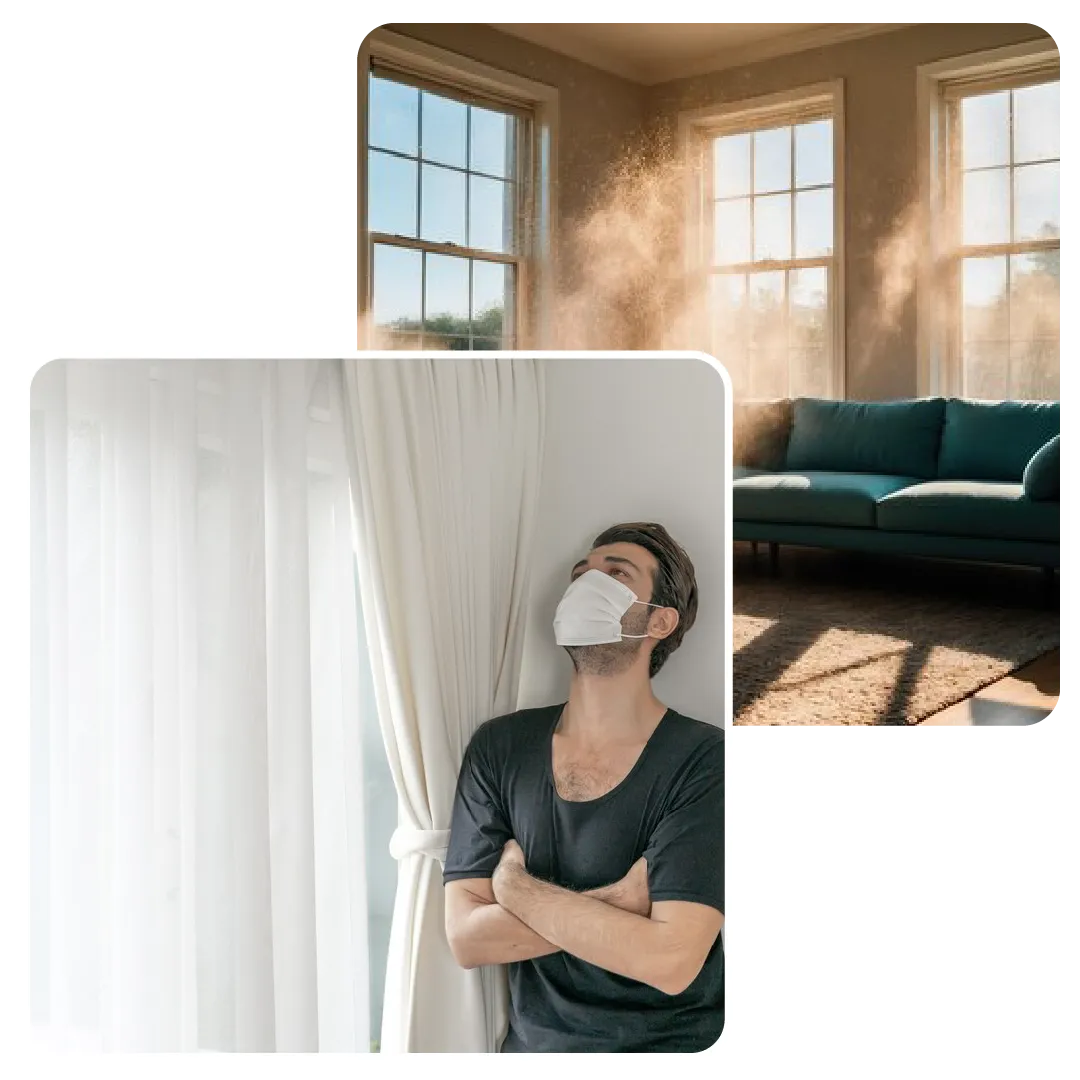

Commonly found in paints, finishes, furnishings, and cleaning products. Can cause headaches, dizziness, irritation, and general discomfort.
Often present in areas with moisture, leaks, or poor ventilation inside buildings. Can trigger allergy symptoms, respiratory irritation, and asthma flare-ups.
Produced by fuel-burning appliances and heating equipment. It may cause flu-like symptoms such as nausea, fatigue, and dizziness.
A naturally occurring gas that can enter buildings from the ground below. Long-term exposure increases the risk of lung cancer over time.
Including dust, pet dander, and pollen that accumulate indoors. Can lead to sneezing, congestion, eye irritation, and ongoing discomfort.

After recent renovations, painting, or new flooring installation.
When persistent chemical odors or unexplained symptoms occur after spending time indoors.
To verify air quality following mold remediation or as part of a green building project.
As part of due diligence for property transactions or tenant health concerns.
Overall indoor air conditions and indicators that may point to chemical, biological, or combustion-related concerns.
Potential sources of indoor air issues, including moisture conditions, materials, building systems, and occupant activities.
Airflow and ventilation performance, including HVAC operation, fresh air exchange, and areas where pollutants may accumulate.
How building layout, use patterns, and occupancy factors influence indoor air quality over time and across different spaces.
We review reported concerns, odors, moisture history, health complaints, and property details.
Certified inspectors evaluate the space, HVAC systems, ventilation conditions, and areas where air quality issues may develop.
We collect air samples using professional equipment. We also record environmental readings.
Accredited laboratories analyze the samples to identify specific contaminants and measure their levels.
You receive a detailed, understandable report. It includes findings and the next steps.
Ideal for health checks and post-renovation safety.
Helps with tenant complaints and maintenance planning.
Provides confidence during pre-closing due diligence.
Supports comfort and productivity with documented air quality.
Protects sensitive occupants and meets safety expectations.
Maintains safe environments for vulnerable individuals.
Delivers third-party verification for post-construction and post-remediation work.

As local environmental testing experts, we understand the conditions, construction types, and challenges common to New York City properties.
Our inspectors are certified IAQ and VOC specialists. Because we do not sell remediation, our testing and recommendations remain fully impartial.
You receive detailed, easy-to-understand reports that explain findings clearly and outline practical next steps without unnecessary jargon.
Our team is available to review results, answer questions, and help you plan next steps after testing is complete.
You notice strong chemical or new smells after painting, renovation, or new furniture.
You have sensitivity to cleaning products, fragrances, or construction materials used indoors.
Your primary concern is chemical off-gassing or mold-related gases rather than visible mold.
You need to document VOC levels after remediation, construction, or improvement work.
Occupants report ongoing symptoms like headaches, coughing, fatigue, or irritation.
You face several concerns at once such as mold, VOCs, carbon monoxide, or allergens.
You are addressing tenant complaints, inspection concerns, or a property with an unknown history.
You need broader screening for real estate, schools, healthcare spaces, or workplaces.