Found in paints, finishes, furnishings, cleaners, and building materials. Exposure to some volatile organic compounds (VOCs) may cause headaches, dizziness, irritation, and discomfort.
Elevated mold spores may be associated with moisture problems or active mold growth. Exposure can trigger allergic reactions and respiratory symptoms in some people.
Produced by fuel-burning appliances and equipment. Exposure can cause headaches, dizziness, nausea, weakness, and other symptoms that become more serious at higher concentrations.
A naturally occurring radioactive gas that can enter buildings from the ground below. Long-term exposure increases the risk of developing lung cancer.
Dust mites, pet dander, pollen, and other indoor allergens can accumulate inside buildings and contribute to sneezing, congestion, eye irritation, and respiratory symptoms.
Tiny airborne particles can come from cooking, combustion, smoke, dust, and outdoor pollution. Fine particles can enter the respiratory system and affect indoor air quality.

We review the property, occupant concerns, odors, moisture history, recent work, and other conditions that may help determine the appropriate testing approach.
The property is evaluated for potential sources and contributing conditions. Air samples, environmental readings, or other appropriate testing methods are collected based on the concerns identified.
Findings and laboratory results, when applicable, are reviewed and presented in a clear report explaining what was identified and recommended next steps.
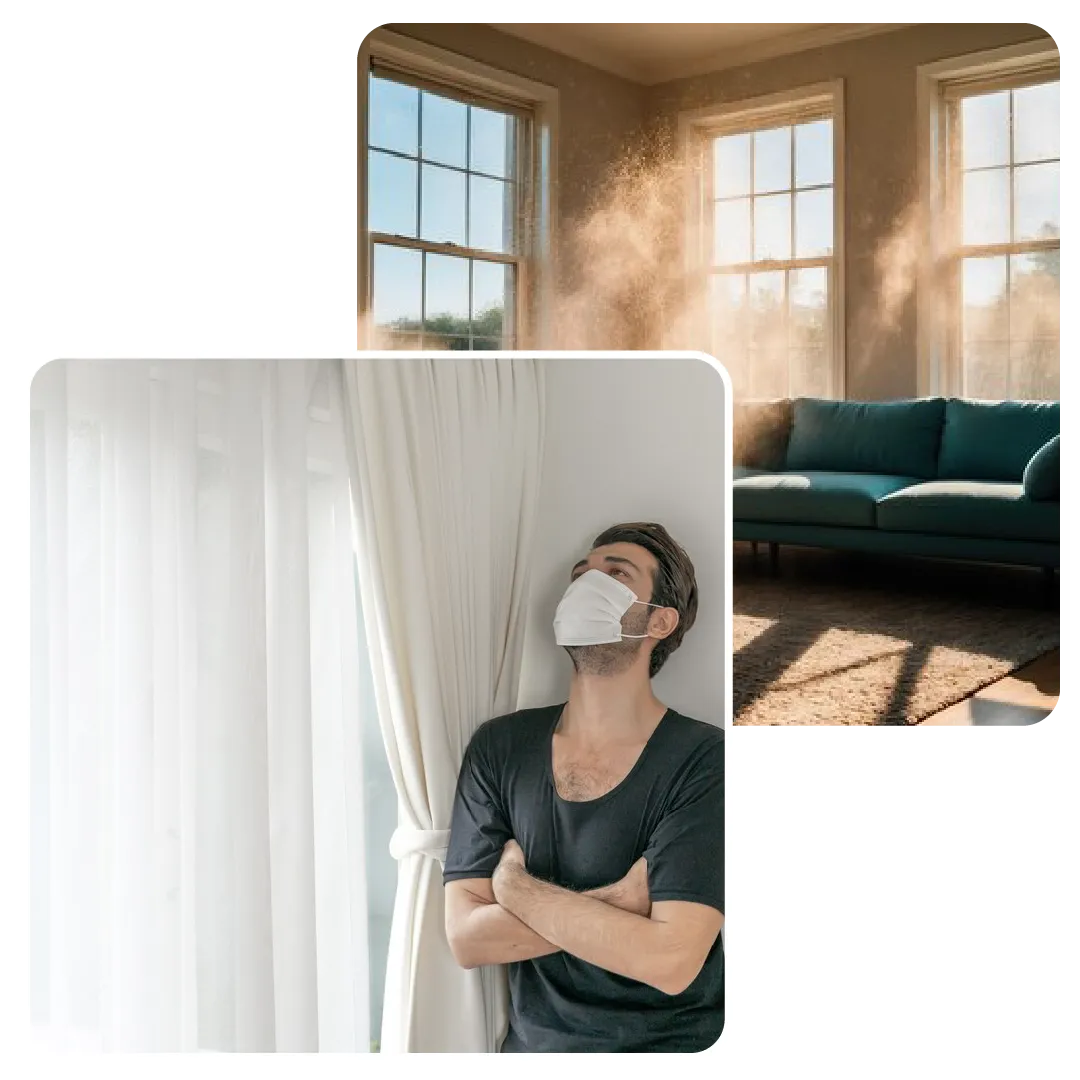
Testing may help investigate recurring headaches, coughing, irritation, allergy symptoms, or other discomfort that appears connected to time spent indoors.
Unusual odors, stuffy conditions, or ongoing air quality concerns may warrant testing when the source cannot be readily identified.
Leaks, water damage, elevated moisture, or suspected mold can affect indoor conditions and may require a broader air quality evaluation.
Testing provides documented information for homes, rental properties, offices, schools, commercial spaces, and other occupied buildings.

We review the property, recent renovations, reported odors, occupant concerns, and potential sources to determine an appropriate testing approach.
Air samples are collected using professional equipment and methods selected for the contaminants and conditions being evaluated.
Testing results are reviewed and presented in a clear report so you can better understand the findings and determine appropriate next steps.
New paint, flooring, cabinetry, adhesives, finishes, and other building materials can release VOCs that affect indoor air quality after renovation or construction.
Strong or lingering chemical odors may indicate continued off-gassing from new furnishings, building materials, cleaning products, finishes, or other indoor sources.
Testing may be appropriate when occupants experience recurring headaches, irritation, nausea, or discomfort that seems connected to time spent indoors.
VOC testing can provide documented information when evaluating indoor air concerns in homes, rental properties, offices, and other occupied buildings.

As local environmental testing experts, we understand the conditions, construction types, and challenges common to New York City properties.
Our inspectors are certified IAQ and VOC specialists. Because we do not sell remediation, our testing and recommendations remain fully impartial.
You receive detailed, easy-to-understand reports that explain findings clearly and outline practical next steps without unnecessary jargon.
Our team is available to review results, answer questions, and help you plan next steps after testing is complete.
You notice strong chemical or new smells after painting, renovation, or new furniture.
You have sensitivity to cleaning products, fragrances, or construction materials used indoors.
Your primary concern is chemical off-gassing or mold-related gases rather than visible mold.
You need to document VOC levels after remediation, construction, or improvement work.
Occupants report ongoing symptoms like headaches, coughing, fatigue, or irritation.
You face several concerns at once such as mold, VOCs, carbon monoxide, or allergens.
You are addressing tenant complaints, inspection concerns, or a property with an unknown history.
You need broader screening for real estate, schools, healthcare spaces, or workplaces.