
Mold Assessment & Compliance Services

Mold issues require the right assessment at the right stage. We provide certified mold assessment services covering inspection, testing, post-remediation verification, clearance, and NYC compliance. Our team delivers unbiased evaluations to help identify mold conditions, confirm proper remediation, and support required regulatory obligations.

Why a Professional Mold Assessment Matters

Mold often develops where it is difficult to see, including behind walls, beneath flooring, around plumbing, and within other concealed building areas. Moisture from leaks, water intrusion, condensation, or elevated humidity can create conditions that allow growth to develop before visible mold or noticeable odors appear. A professional mold assessment helps identify these conditions, determine where further investigation is needed, and evaluate concerns that may affect indoor air quality or building materials.
Our certified mold assessors evaluate the property to better understand both the visible conditions and the moisture sources that may be contributing to the problem. Depending on the property and findings, the assessment may include visual inspection, moisture mapping, and targeted environmental mold testing.
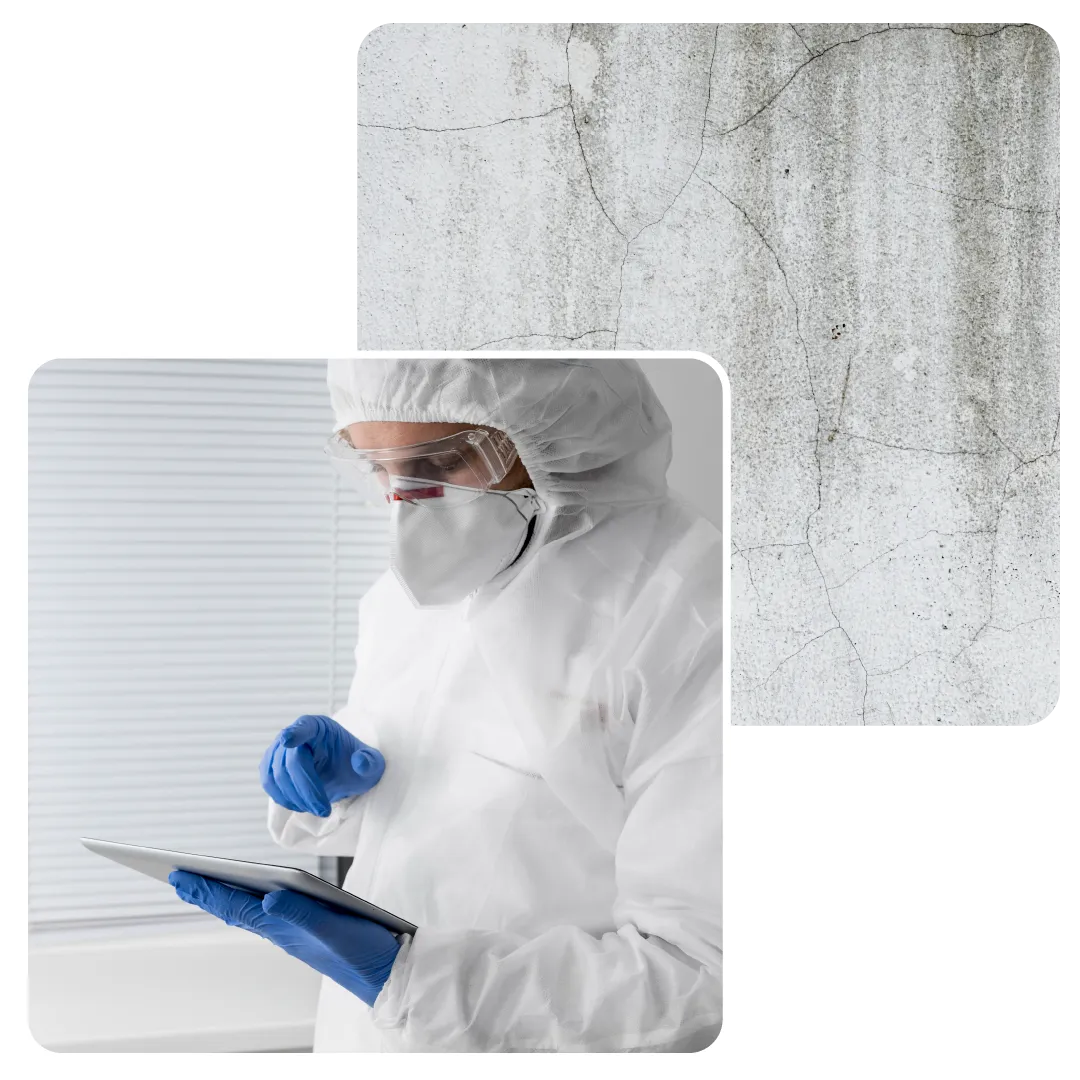
PPE-clad technician reviewing tablet during mold assessment on site
After remediation, follow-up assessment and clearance testing can also help determine whether the identified work has been completed successfully and the affected areas meet the applicable criteria. Mold assessment also supports NYC housing requirements, including Local Law 55. It provides clear documentation to address active issues, confirm completed remediation, or meet compliance obligations, so property decisions rely on verified information.

Mold Inspection & Testing

If you notice musty odors, visible growth, water damage, or persistent moisture, a professional mold assessment can help determine what is happening and where the problem may be coming from. We evaluate visible and concealed conditions to identify potential mold growth, moisture concerns, and affected areas that may require further action.
Findings are documented in a detailed assessment report that explains observed conditions and recommended next steps. This gives homeowners, property managers, tenants, and other stakeholders objective information to determine whether remediation or additional investigation is needed.
Environmental remediation specialists wearing protective suits and respirators reviewing inspection data on a laptop during a hazardous material or mold remediation assessment.
A mold assessment may include:

Post-Remediation Verification ​

After mold remediation is completed, Post-Remediation Verification (PRV) evaluates the treated areas to determine whether the work achieved its intended results. Our certified mold assessors review current site conditions, look for remaining visible mold or moisture concerns, and verify that conditions contributing to mold growth have been addressed.
Findings are documented in a clear verification report that records observed conditions and any additional concerns identified during the assessment. As an independent assessment firm, we provide objective information that property owners, managers, contractors, and other stakeholders can use to confirm completed work and determine appropriate next steps.
Handheld thermal camera displaying moisture scan for mold assessment
Post-remediation verification may include:

Post-Remediation Clearance Testing

Some mold remediation projects require formal clearance testing to document conditions after the work is complete. Post-remediation clearance testing combines a final visual assessment with appropriate environmental sampling to evaluate treated areas and determine whether conditions meet the project’s established clearance criteria.
Results are documented in a formal clearance report that explains the inspection and laboratory findings and identifies whether additional corrective action may be needed. This documentation can support property records, contractor closeout, insurance requirements, and other situations where third-party verification is requested.
Mold inspector documenting exterior property conditions during a professional mold assessment.
Post-remediation clearance testing may include:

Local Law 55 Compliance

New York City Local Law 55 requires owners of certain residential buildings to take specific steps to identify and address indoor allergen hazards, including mold and conditions that contribute to mold growth. Professional assessment can help property owners document conditions, understand the scope of a mold concern, and determine what action may be needed to support compliance.
Our certified mold assessors provide independent evaluations and clear documentation based on observed property conditions. Findings can help owners and property managers address moisture and mold concerns, plan appropriate remediation, and maintain records related to applicable New York City requirements.
New York City residential buildings subject to Local Law 55 mold and indoor allergen requirements.
Local Law 55 assessment may include:

Why Choose Our Certified Mold Assessors

Accurate mold assessment requires an objective and careful approach. Our certified mold assessors provide inspection-only services and do not perform remediation. This means our findings and recommendations are based solely on what we observe and measure, not on selling cleanup work.
We use professional tools such as moisture meters, infrared imaging, and mold air sampling services to evaluate conditions throughout the property. When samples are collected, they are analyzed by accredited laboratories to provide clear, reliable results you can trust.
Handshake icon representing agreement, partnership, or collaboration
Schedule Your Mold Assessment
Not sure which mold assessment service applies to your situation? Share a few details about your property or concern. We review the information and recommend inspection, PRV, clearance testing, or Local Law 55 compliance based on your needs.
How to Choose the Right Service
Use this simple guide to identify the mold assessment service that best fits your situation. Each option below reflects a different stage in the assessment and compliance process. If you are unsure, our certified team can help confirm the right path.
Mold Inspection and Testing

Choose this service if you suspect mold, notice odors, visible growth, water damage, or moisture issues, or need an assessment before renovation, purchase, or sale.

Post-Remediation Verification

Select this option once remediation is complete and you need independent confirmation that cleanup was successful and moisture conditions have been addressed.

Clearance Testing

Use clearance testing when formal pass or fail results are required for insurance, legal documentation, or third-party certification before re-occupancy.

Local Law 55 Inspection

This service applies to NYC residential buildings that require annual compliance inspections for mold, moisture, and indoor allergen hazards.
Service Areas

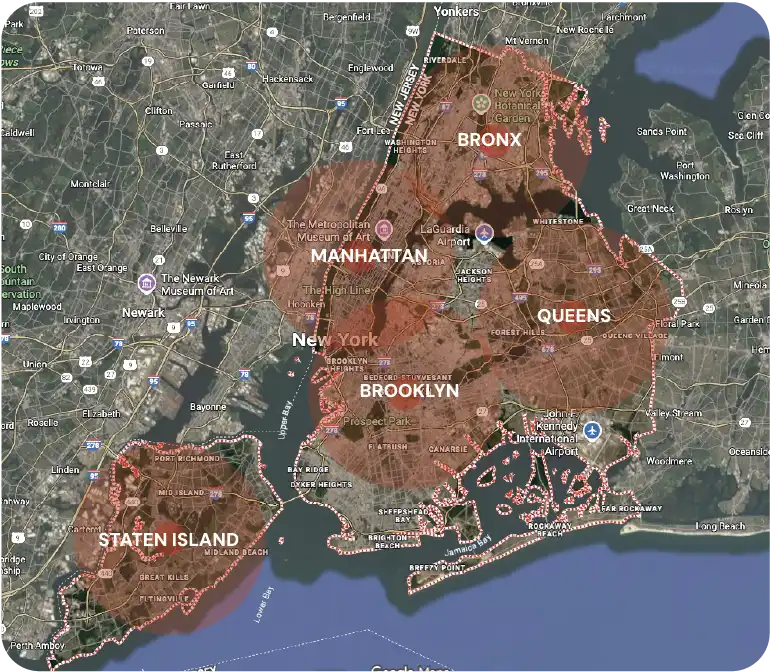
We offer mold assessment & compliance NYC services across all boroughs and nearby counties.
Map of New York City highlighting Manhattan, Bronx, Queens, Brooklyn, and Staten Island service areas
Our team provides fast scheduling for Manhattan, Brooklyn, Queens, the Bronx, and Staten Island, giving property owners convenient access to reliable testing and clear reporting.
We also assist nearby counties that depend on accurate results for safe decision-making.
Whether you manage a single unit or multiple buildings, our inspectors reach your location quickly and complete each inspection with precision, delivering trusted lead paint inspection NYC when you need it most.

Frequently Asked Questions

HOW DO I KNOW WHICH MOLD SERVICE I NEED?
If you suspect mold, moisture, or water damage, start with Mold Inspection & Testing. If remediation has already been completed, the next step is usually Post-Remediation Verification (PRV) or Clearance Testing, depending on documentation requirements.
PRV confirms whether remediation work addressed mold and moisture conditions appropriately. Clearance Testing is a more formal process that includes laboratory analysis and provides an official pass or fail result with written documentation.
Yes. Local Law 55 requires qualifying New York City residential buildings to undergo annual inspections for mold, moisture, and indoor allergen conditions and to correct issues that meet violation criteria.
Yes. An initial mold inspection identifies affected areas and contributing moisture sources, which helps guide proper remediation and reduces the risk of incomplete cleanup.
In some cases, yes. An inspection may address health concerns, but clearance testing or Local Law 55 inspections often require separate documentation depending on the situation.