Radon Testing Services

Radon is a naturally occurring, radioactive gas that forms in soil and rock and can enter buildings through foundations and openings. It is invisible and odorless, making it impossible to detect without testing. Elevated radon levels indoors are a known health concern, which is why professional measurement is the only way to understand whether radon is present and at what concentration.

Why Radon Testing Matters

Radon is a naturally occurring radioactive gas that forms in soil and rock and can enter buildings through cracks, joints, utility openings, and other pathways in contact with the ground. Because it is invisible and odorless, radon cannot be detected by sight or smell.
Indoor radon levels can vary based on building design, foundation conditions, ventilation, weather, and seasonal changes. Concentrations may also differ between buildings in the same area, which means testing is the only reliable way to determine the radon level inside a specific property.
Testing provides a clear picture of current indoor radon conditions, helping property owners understand potential exposure and make informed decisions about whether further evaluation or action is needed.
Professional radon testing to measure indoor air quality and detect radon gas in buildings
Health
Long-term exposure to radon increases the risk of lung cancer. Because exposure does not cause immediate warning signs, elevated levels can go unnoticed without proper testing.
Building Conditions
Radon can enter through foundation cracks, construction joints, gaps around utilities, crawlspaces, and other openings. Lower and below-grade areas may be particularly important when determining where testing should occur.
Testing
Professional radon testing provides measured results in picocuries per liter (pCi/L). The Environmental Protection Agency (EPA) recommends taking action at 4 pCi/L or higher and considering action for levels between 2 and 4 pCi/L.

What We Test For

RADON LEVELS & BUILDING CONDITIONS
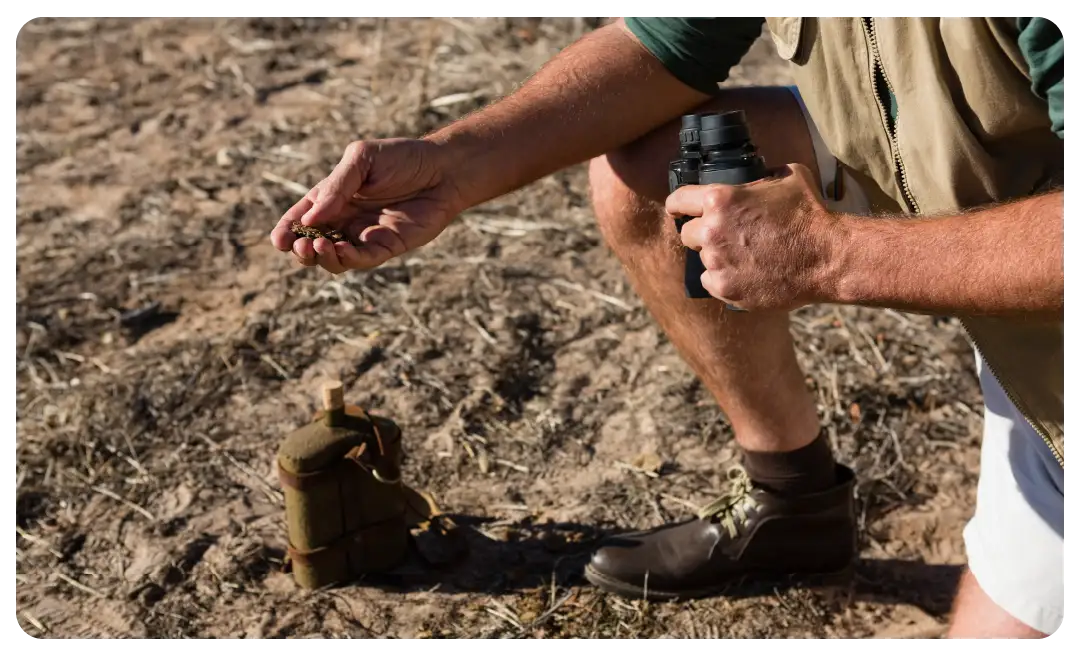
Professional radon testing measures indoor concentrations while also considering property conditions that can influence where radon enters and accumulates. Together, these findings provide a clearer understanding of measured levels and the building conditions relevant to the testing process.

Radon Concentration

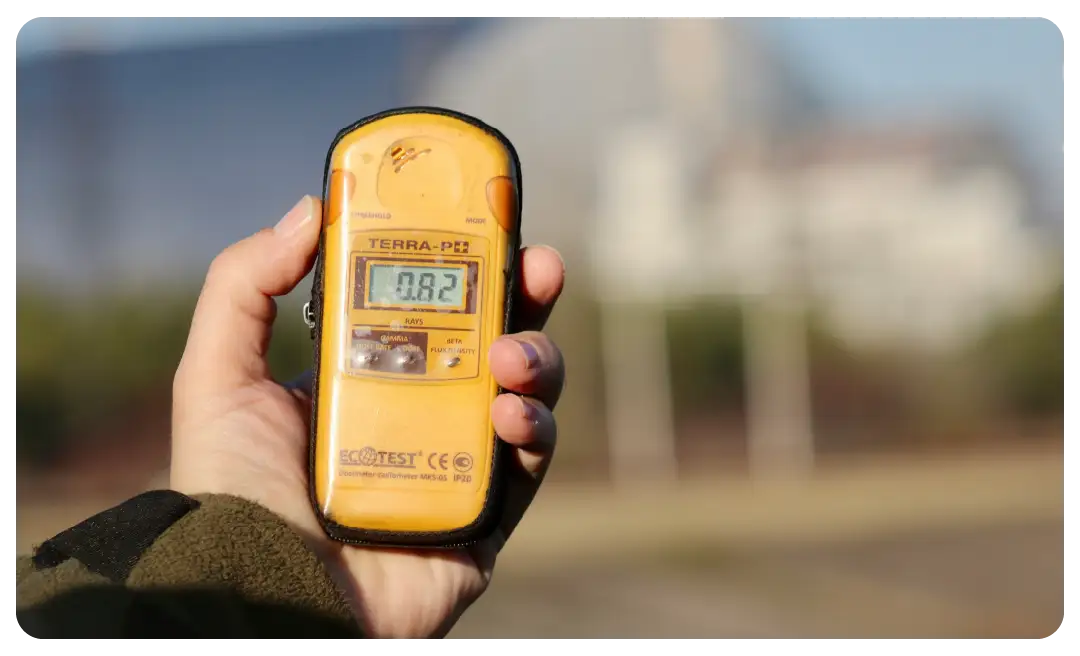
We measure indoor radon concentrations in picocuries per liter (pCi/L) using appropriate testing equipment and established protocols. Results provide property-specific data that can be compared with Environmental Protection Agency (EPA) guidance to determine whether further action should be considered.
Handheld radon detector displaying 0.82 during on-site radon testing

Contributing Conditions

Building design and environmental conditions can influence how radon enters and accumulates indoors. We consider factors such as foundation type, lower-level and below-grade spaces, ventilation, and other property conditions that may affect monitor placement and measured radon levels.
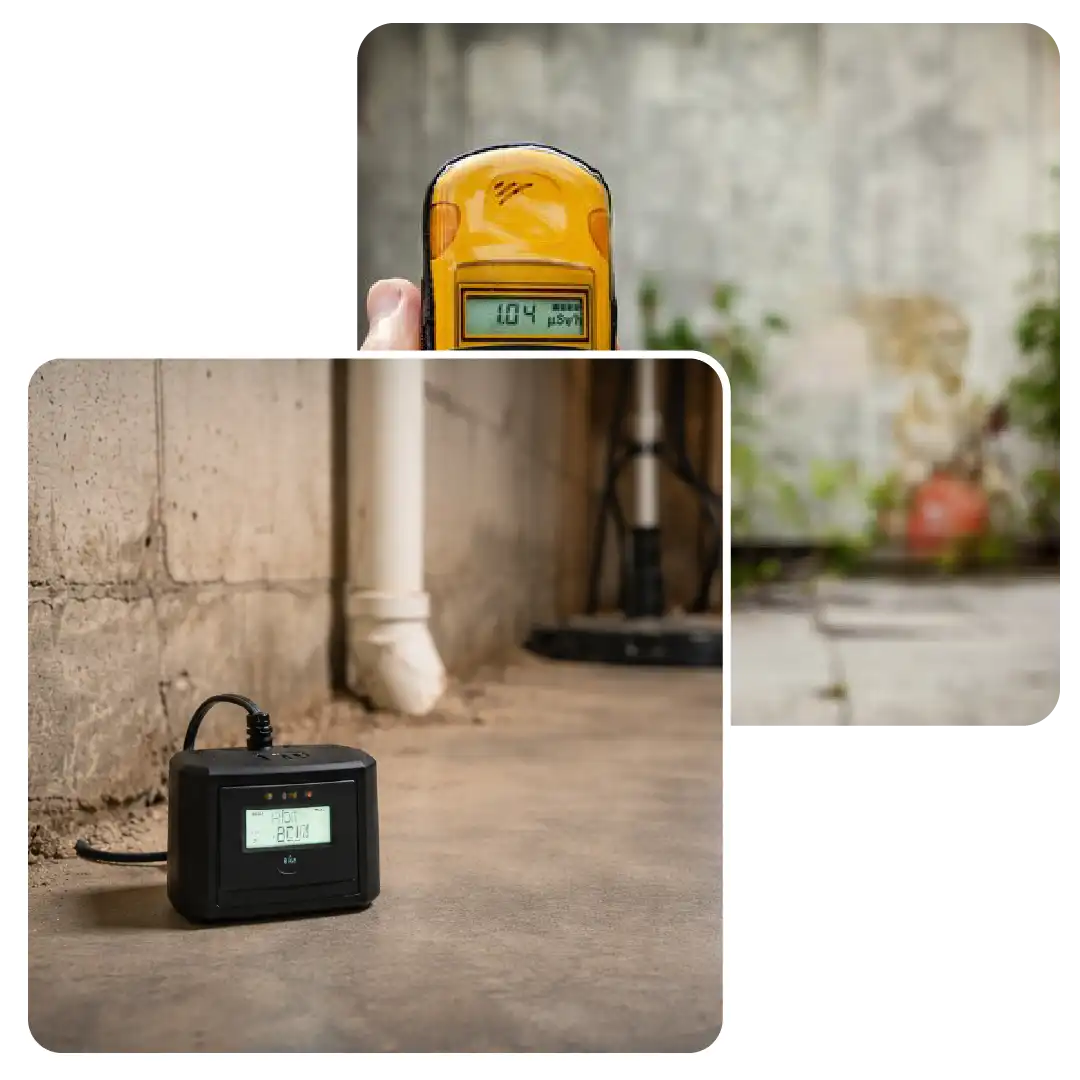
Radon testing equipment used to detect radon gas and monitor indoor air quality in buildings

Potential Entry Points

Cracks in slabs and foundations, construction joints, crawlspaces, sump areas, and openings around utilities are common pathways for radon to enter a building. Identifying relevant building features provides additional context for understanding measured levels and determining appropriate next steps.
Radon testing device used to detect radon gas and monitor indoor air quality in buildings

When to Consider Radon Testing

Radon has no smell, color, or visible warning signs. Testing may be appropriate based on the property, building conditions, recent changes, or the need for updated information about indoor radon levels.

Geographic Risk

Radon can occur in buildings throughout the country, but some areas have a greater potential for elevated levels. Local risk information can help inform testing decisions, but it cannot predict the level inside an individual property.

Real Estate Transaction

Radon testing can provide buyers and sellers with documented information about indoor levels during a real estate transaction. Testing requirements or recommendations may vary depending on the transaction and location.

First-Time Testing

If a property has never been tested, there may be no reliable information about its current radon levels. An initial test establishes measured results that can be used to determine whether further action is appropriate.

Building Features

Basements, crawlspaces, slab foundations, foundation openings, and other building features can provide pathways for radon to enter. Testing is the only way to determine whether these conditions are contributing to elevated indoor levels.

Recent Renovations

Renovations that change ventilation, insulation, air sealing, foundations, or other building conditions can affect how air moves through a property. Retesting can help determine radon levels after significant changes.

Outdated Test

Radon levels can change over time, so an older result may not reflect current conditions. Retesting may be appropriate after several years, significant building changes, or when previous results were near or above recommended action levels.

Radon levels can vary over time and from one property to another. Professional testing provides current, property-specific measurements to help you understand indoor conditions and determine appropriate next steps.

Our Radon Testing Methods

(SHORT-TERM & LONG-TERM)

We follow Environmental Protection Agency (EPA) guidance and applicable American National Standards Institute/American Association of Radon Scientists and Technologists (ANSI/AARST) standards for radon testing. The appropriate method depends on the property, testing purpose, and available timeframe. Proper device placement and controlled testing conditions help support reliable results.
Short-Term Testing (48–96 hours)

Short-term testing is commonly used for real estate transactions, initial screening, and other time-sensitive situations. Continuous radon monitors collect readings throughout the testing period, providing measured data that helps determine whether additional testing or further action should be considered.

Long-Term Testing (90+ days)

Long-term testing measures radon over an extended period, providing a broader picture of average concentrations as levels fluctuate over time. By accounting for daily and seasonal variations, this approach can provide useful information about longer-term radon conditions within the property.

Both methods require appropriate device placement and testing conditions. We handle monitor placement, retrieval, data review, and reporting so you receive clear results and guidance based on the measured radon levels.

Radon Testing Process

(STEP-BY-STEP)
Our radon testing process follows a clear, controlled workflow. Each step ensures accurate measurement and reliable results that meet EPA and ANSI/AARST standards.

On-Site Property Assessment

A certified technician reviews the building layout, lowest occupied levels, foundation type, and potential radon entry points. This step determines proper monitor placement.

Controlled Monitoring Period

The device records radon levels at regular intervals. Short-term tests typically run 48-96 hours, while long-term tests remain in place for extended monitoring.

Final Report & Guidance

You receive a clear report with measured results, data graphs, and interpretation. If levels exceed guidelines, we outline recommended next steps so you can address radon concerns with confidence.

1

2

3

4

5

6

Scheduling & Pre-Test Instructions

We confirm the test type, property details, and timing. You receive clear closed-building instructions so conditions remain stable before testing begins.

Certified Device Placement

We place calibrated radon monitors in the correct location, typically the lowest livable level. Proper placement ensures valid, representative data collection.

Professional Retrieval & Data Analysis

We retrieve the device and analyze the full data set. Results are calculated in picocuries per liter (pCi/L) and compared to the EPA action level of 4.0 pCi/L.
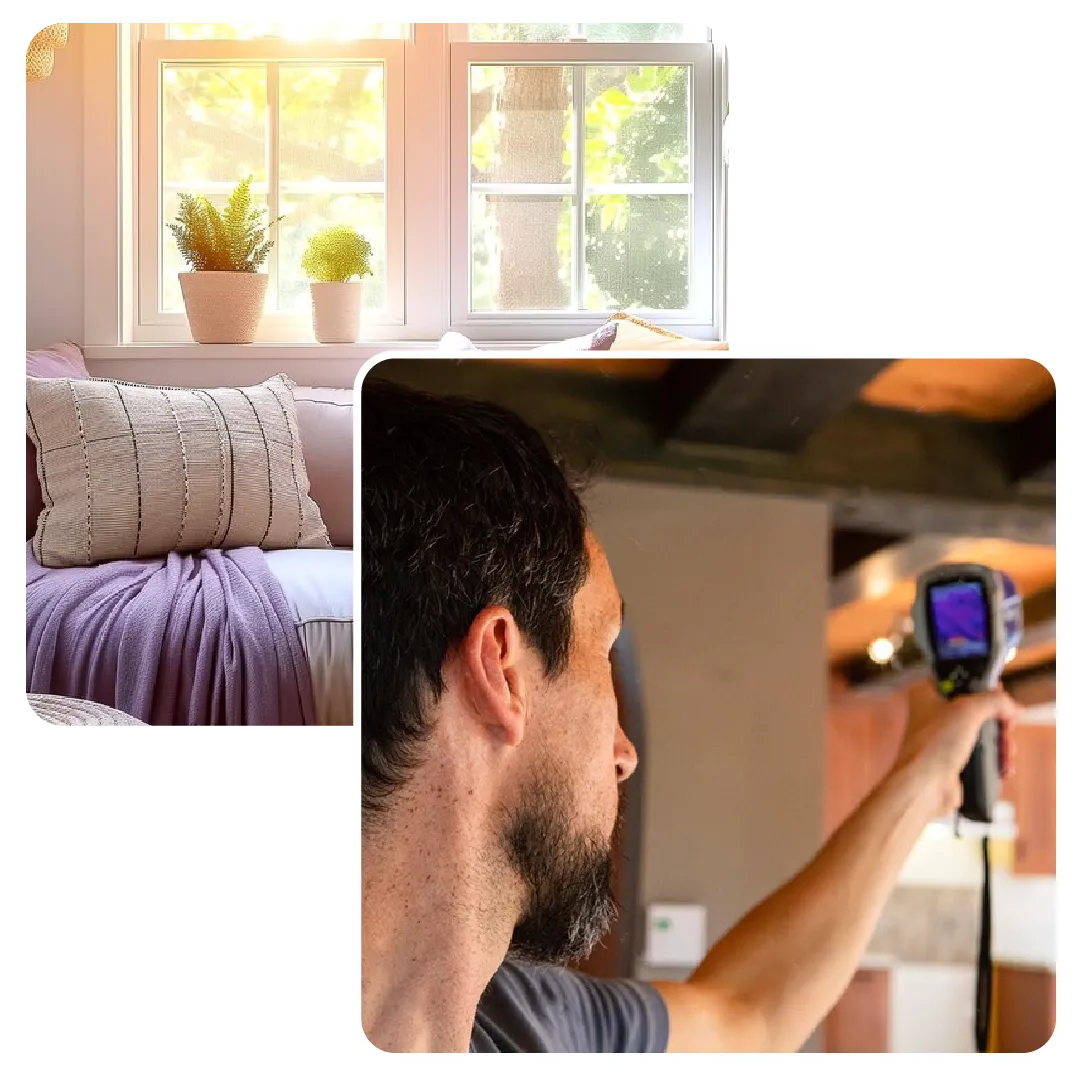
Radon Testing for Homes & Commercial Properties

Radon can affect residential and commercial buildings of many types, and elevated levels cannot be identified through sight or smell. BEP Environmental provides professional radon testing for homes, rental properties, multi-unit buildings, offices, schools, and other occupied spaces, with testing plans based on the property and purpose of the assessment.
Whether testing is needed for a real estate transaction, an existing property concern, due diligence, or a first-time assessment, we provide clear measurements and documented results to help property owners and other stakeholders make informed decisions.
Radon testing equipment placed in a residential home to monitor indoor radon levels

Residential Radon Testing

Homes, apartments, townhouses, and rental units can all be affected by radon, particularly in lower and below-grade living spaces. Testing provides property-specific measurements for homeowners, buyers, sellers, landlords, and residents who need to understand indoor radon levels.

Residential testing may be appropriate during a real estate transaction, after significant building changes, when previous results are outdated, or when a property has never been tested. Results provide clear information about measured levels and whether additional testing or action should be considered.

Commercial Radon Testing

Commercial buildings, offices, schools, multi-unit properties, and other facilities may require a broader testing approach based on building size, layout, occupancy, and the areas being evaluated. Proper monitor placement helps provide representative measurements across relevant spaces.
Commercial radon testing provides documented results that can support property management, due diligence, environmental evaluations, and other building-related decisions. Findings are presented clearly so owners and managers can understand measured conditions and determine appropriate next steps.

Who We Serve

Radon can affect many types of buildings. We provide professional radon testing tailored to the property, occupancy, and reason for testing, delivering documented results that support informed decisions.

Homeowners & Residents

Understand radon levels in homes, apartments, and other living spaces with property-specific testing and clear, documented results.

Property Managers & Landlords

Evaluate radon conditions in rental units, multi-unit buildings, and managed properties to support responsible property management and occupant safety.

Schools & Healthcare

Assess radon levels in schools, healthcare facilities, and other occupied buildings where understanding long-term indoor conditions is especially important.

Real Estate Professionals

Provide independent radon testing to support buyers, sellers, agents, and other parties who need documented results during real estate transactions.

Each radon assessment is planned around the building type, occupancy, testing purpose, and areas that need to be evaluated.

Benefits of

Professional Radon Testing

Professional radon testing provides more than a single measurement. It delivers property-specific data that helps you understand indoor radon levels, evaluate potential exposure, and make informed decisions about appropriate next steps.
Early Detection & Awareness

Professional testing can identify elevated radon levels that would otherwise go unnoticed. Earlier awareness gives property owners the information needed to consider appropriate next steps before long-term exposure continues.

Documented, Reliable Results

You receive documented radon measurements collected using established testing protocols. Clear results can support real estate transactions, property evaluations, recordkeeping, and other situations where reliable radon data is needed.

Clear Next-Step Decisions

Testing shows how measured radon levels compare with Environmental Protection Agency (EPA) guidance. This information helps you determine whether additional testing, further evaluation, or radon mitigation should be considered.

Confidence for Occupants & Owners

Reliable testing replaces uncertainty with property-specific information. Homeowners, landlords, property managers, and other stakeholders can better understand indoor radon conditions and make informed decisions based on measured results.

Handshake icon representing agreement, partnership, or collaboration

Why Choose Us

FOR YOUR LEAD SAFE CLEARANCE TESTING

When an invisible hazard must be measured, accuracy and standards matter. Our clients rely on us for professional radon testing services because our work is grounded in nationally recognized protocols, certified expertise, and precise instrumentation. Every assessment is performed to produce defensible results that can be trusted for health decisions, real estate transactions, and long-term property planning.
Certified Specialists

Our technicians are certified by the National Radon Proficiency Program (NRPP) and National Radon Safety Board (NRSB), demonstrating verified training and ongoing compliance with professional requirements.

Compliant Methodology

All testing follows EPA and ANSI/AARST standards to ensure proper device placement, test duration, and defensible results.

Advanced Technology

We use calibrated continuous radon monitors that collect detailed, time-weighted data rather than single snapshot readings.

Actionable Reporting

You receive clear, documented radon reports with results and guidance aligned with the EPA 4.0 pCi/L action level.
Service Areas

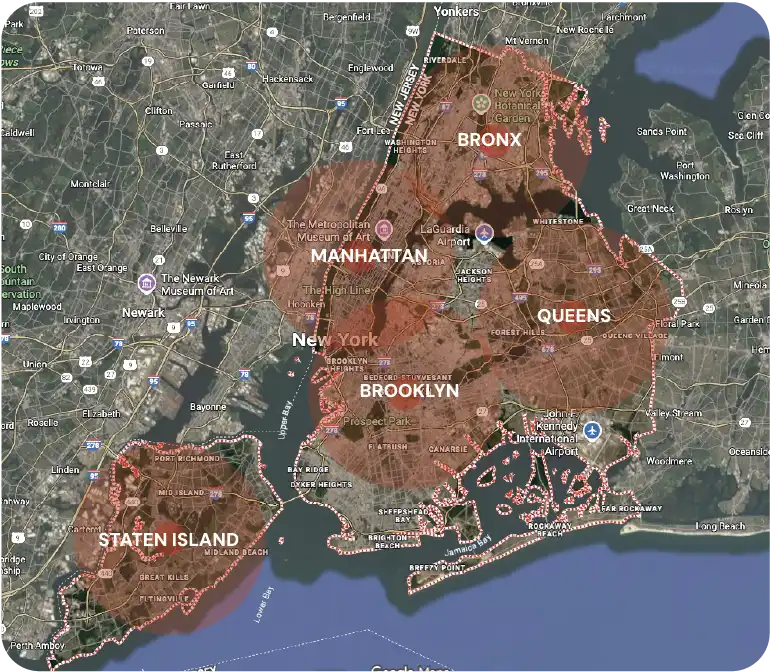
Map of New York City highlighting Manhattan, Bronx, Queens, Brooklyn, and Staten Island service areas
We offer radon testWe provide professional radon testing throughout New York City, serving residential, multi-unit, commercial, and institutional properties across the five boroughs.ing NYC services across all boroughs and nearby counties.
Our team serves Manhattan, Brooklyn, Queens, the Bronx, and Staten Island, providing property-specific testing and clear reporting for homeowners, landlords, property managers, real estate professionals, and other clients.
We also provide radon testing in surrounding service areas, helping property owners obtain reliable measurements for real estate transactions, first-time testing, property evaluations, and ongoing radon concerns.
Whether you need testing for a single home, apartment, or larger building, BEP Environmental provides clear results and practical guidance based on the measured radon levels.

Frequently Asked Questions

What is a radon inspection?
A radon inspection measures indoor radon levels using certified monitoring devices placed in the building under controlled conditions.
Radon testing requirements vary by location and circumstance. Testing is commonly required during real estate transactions and by some lenders or agencies.
The EPA action level is 4.0 pCi/L. Results at or above this level indicate increased health risk and may warrant mitigation.
Professional radon testing is conducted by NRPP or NRSB certified professionals using approved methods and calibrated devices.
Radon testing provides buyers and sellers with objective data about indoor radon levels to support informed purchasing decisions.
Short-term testing provides a snapshot of radon levels over a few days. Long-term testing measures average exposure across seasonal and environmental changes.
Short-term tests run 48–96 hours. Long-term tests measure average exposure over 90 days or more.
Yes. Radon levels can fluctuate due to weather, ventilation patterns, building use, and seasonal conditions.
No. Radon can affect any occupied level of a building, particularly lower floors and ground-contact areas.
Yes. Construction changes, sealing, and renovations can alter airflow and increase radon accumulation.
Testing results help determine whether mitigation is recommended and guide appropriate next steps to reduce exposure safely.