



Lead-Based Paint Testing for NYC Homes and Buildings

Understanding New York City lead paint requirements starts with the right testing. Our certified inspectors perform XRF testing, risk assessments, and clearance inspections for buildings across NYC. All services are conducted in accordance with Local Law 1, Local Law 31, and Local Law 66, delivering clear, reliable results that meet NYC requirements.

Why Lead Paint Testing Matters in NYC

Lead-based paint is still present in many New York City buildings, particularly those built before 1960. Lead hazards are often hidden beneath intact or newly painted surfaces and cannot be identified by sight alone. Even when paint appears in good condition, lead dust can remain in window frames, baseboards, doors, and other friction or previously disturbed areas.
Lead dust is one of the most common exposure pathways inside buildings. Young children are especially vulnerable due to frequent hand-to-mouth contact, but adults and pregnant individuals can also be affected. Because of these risks, NYC requires property owners to identify and manage potential lead hazards using certified testing methods rather than visual checks alone.
The type of lead paint testing required is not the same for every property. Building age, residential use, child occupancy, renovation activity, and applicable local laws all play a role in determining what testing is needed. Many owners searching for lead-based paint testing near me discover that understanding these factors early helps prevent incorrect testing, compliance issues, and delays during inspections, renovations, or property transactions.
Health
Lead exposure can occur without visible warning signs and is often linked to dust on floors, windows, and other interior surfaces. Testing helps identify hidden hazards that may affect children, adults, and pregnant individuals before health concerns arise.
Safety
Lead risks increase when painted surfaces are disturbed through everyday wear, maintenance, or renovation work. Certified testing provides the information needed to manage these conditions responsibly and reduce the chance of lead dust spreading.
Compliance
New York City requires property owners to follow specific lead paint testing and documentation rules. Completing testing proactively helps avoid violations, prevent fines, and reduce delays during inspections, renovations, or property transactions.

NYC Lead Paint Laws & Compliance Overview

NYC lead paint compliance is governed by multiple local laws that work together to protect occupants and regulate how testing and maintenance are performed. Each law applies under specific conditions and serves a different role in identifying, managing, and documenting lead hazards. Understanding which laws affect your property is essential for selecting the correct testing and meeting New York City requirements.
Local Law 1
Ongoing Lead Hazard Prevention
Local Law 1 is New York City’s primary lead safety law and focuses on preventing lead exposure in residential units where children under six live or routinely reside. It requires property owners to investigate lead hazards, maintain painted surfaces, use lead safe work practices, and complete certified testing when hazards are identified. Compliance is ongoing and tied to both occupancy and property conditions.
Local Law 31
Mandatory Building-Wide Inspection
Local Law 31 requires many residential buildings to complete a one-time, building-wide XRF inspection of all painted surfaces. The law primarily applies to buildings constructed before 1960, and certain buildings built between 1960 and 1978. Inspections must be performed by certified professionals, with official reports submitted and retained for Department of Housing Preservation and Development (HPD) compliance.
Local Law 66
Updated Hazard Threshold
Local Law 66 amended NYC lead regulations by lowering the threshold used to define lead-based paint. This update directly affects how testing results are interpreted under both Local Law 1 and Local Law 31. As a result, accurate testing and reporting are critical, because surfaces with lower lead levels may now require evaluation or corrective action under current standards.

Trusted Support for NYC Compliance

Need to schedule certified lead paint testing, or want help understanding which NYC law applies to your property? Submit the form and our team will help direct you to the correct testing service based on your building and regulatory requirements.

Lead-Based Paint Inspection

A certified lead-based paint inspection determines whether lead-based paint is present within a building and documents where it exists. This service is often the first step for owners of older New York City properties, where lead hazards may be hidden beneath intact or newly painted surfaces. Because lead cannot be identified visually, certified inspection methods are required to accurately assess conditions and establish a clear baseline.
During an inspection, painted surfaces such as walls, windows, doors, trim, railings, and common areas are evaluated and documented. When appropriate, additional testing methods may be used to support accurate findings. The resulting inspection report provides legally recognized documentation used for risk evaluation, renovation planning, and compliance with NYC lead paint requirements.

XRF Lead Testing

X-ray fluorescence (XRF) lead testing is the primary non-destructive method used in New York City to identify lead content beneath painted surfaces. This testing method is required for building-wide inspections under Local Law 31 and is commonly used to support evaluations conducted under Local Law 1. XRF testing allows inspectors to determine whether painted surfaces meet the legal definition of lead-based paint without damaging walls, trim, or finishes.
Certified inspectors use calibrated XRF devices to efficiently survey painted surfaces throughout a building, including apartments and common areas. This process is well suited for large or multi-unit properties where comprehensive and consistent results are required. XRF testing produces precise, documented readings that are used to determine compliance status, support inspection reports, and guide next steps when lead is identified.

EPA-Certified Lead Testing

All lead paint testing services are performed by EPA-certified lead inspectors and risk assessors in accordance with federal requirements and applicable New York City regulations. EPA certification confirms that inspectors are properly trained, use approved testing methods, and follow established procedures for identifying and documenting lead-based paint and lead hazards.
EPA-certified lead testing supports a wide range of needs, including compliance filings, renovation and repair planning, and property transactions. Proper certification helps ensure testing results are accepted by regulatory agencies and relied upon by owners, contractors, and other stakeholders. Using certified inspectors also helps reduce the risk of incomplete testing, rejected documentation, or delays tied to noncompliant methods.

Lead Paint Risk Assessment

A lead paint risk assessment evaluates whether lead hazards are present and how occupants may be exposed. Unlike a basic inspection, this service focuses on identifying active risks tied to deteriorated paint, lead dust, and other exposure pathways. Risk assessments are commonly required in NYC compliance scenarios where health concerns, renovations, or occupancy conditions raise the potential for exposure.
The assessment may include surface evaluation, environmental dust sampling, and soil sampling when conditions warrant. Findings are analyzed to determine hazard severity and exposure risk, with results documented in a clear report. This information is used to guide corrective actions, prioritize repairs, and support compliance with NYC lead paint requirements, including Local Law 1.

Dust Clearance Testing

Dust clearance testing is the required final step after renovation, repair, or abatement work that may disturb lead-based paint. This testing confirms whether lead dust levels meet current safety standards before a space can be safely reoccupied. In NYC, clearance testing is mandatory in many compliance scenarios and must be completed by certified professionals following approved federal and local protocols.
Our process focuses on accuracy, consistency, and clear documentation. Certified inspectors collect dust wipe samples from floors, interior windowsills, and window wells, which are analyzed by an accredited laboratory. A passing result produces the official clearance report needed to close out projects, satisfy regulatory requirements, and confirm that the space is ready for safe use without delays or uncertainty.

A Reliable Partner for NYC Lead Testing

We provide NYC lead testing services for homeowners, landlords, property managers, and real estate professionals across New York City. Our work supports a wide range of needs, including compliance inspections, renovations, property transactions, and violation resolution. Every client receives the same focus on accuracy, regulatory alignment, and clear communication from start to finish.
Why choose our NYC lead testing services
Certified Expertise

All inspections are performed by NYC-certified and EPA-certified lead inspectors who follow current federal and local requirements.

Modern Technology

We use calibrated, professional-grade testing equipment to deliver consistent and reliable results across all property types.

Defensible Reporting

Our reports are clear, thorough, and structured to meet HPD and other legal documentation standards.

Practical Guidance

We explain results in plain language and outline practical next steps so you can move forward with confidence.
Lead Based Paint Testing

Need certified lead paint testing in NYC or help understanding which requirements apply to your property? Submit the form to request testing and receive clear, compliance-ready results from certified inspectors.

Service Areas

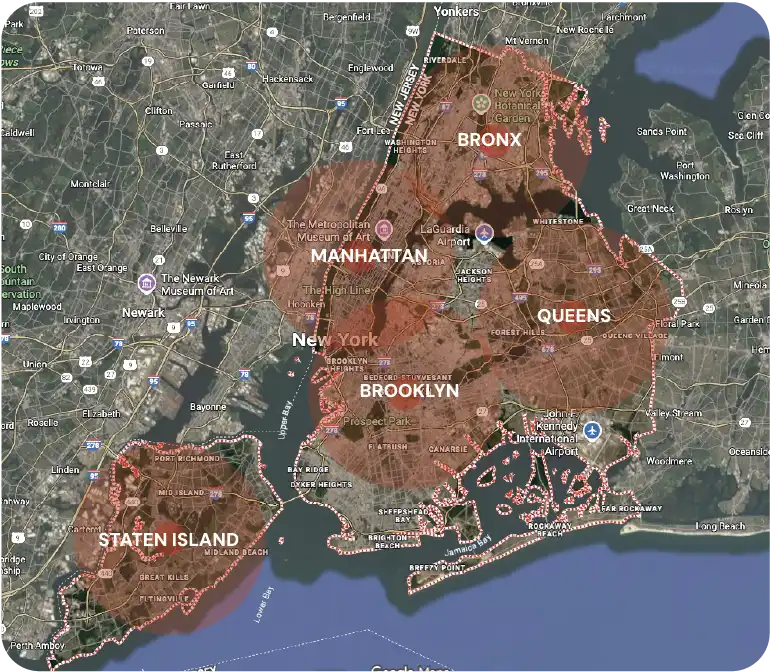
We offer lead-based paint testing NYC services across all boroughs and nearby counties.
Our team provides fast scheduling for Manhattan, Brooklyn, Queens, the Bronx, and Staten Island, giving property owners convenient access to reliable testing and clear reporting.
We also assist nearby counties that depend on accurate results for safe decision-making.
Whether you manage a single unit or multiple buildings, our inspectors reach your location quickly and complete each inspection with precision, delivering trusted lead paint inspection NYC when you need it most.

Frequently Asked Questions

WHAT LEAD PAINT TESTING IS REQUIRED IN NYC?
Required lead paint testing depends on your building’s age, occupancy, and which local laws apply. Most residential buildings built before 1960 must complete a one-time, building-wide XRF inspection under Local Law 31. Buildings where a child under six resides require ongoing inspections and hazard management under Local Law 1.
X-ray fluorescence (XRF) testing is mandatory for the building-wide inspections required by Local Law 31. It is also the standard method used for certified lead-based paint inspections and is commonly relied on for investigations connected to Local Law 1 compliance.
Older reports may not meet current requirements. Local Law 66 lowered the threshold used to define lead-based paint, which can affect how prior results are interpreted. In many cases, updated testing is needed to ensure reports reflect current NYC standards.
Testing time varies by building size and scope. Individual apartments may be completed quickly, while building-wide inspections can take longer. Reports are typically issued after testing data is reviewed and finalized.
If lead-based paint or hazards are identified, property owners must follow NYC requirements for repair, maintenance, or abatement. Certified clearance testing is required after lead-disturbing work before the space can be reoccupied.