Have you noticed a chemical smell after painting, installing new flooring, or bringing new furniture into a room? That smell may come from volatile organic compounds (VOCs), which are released into the air by many common products and building materials. In some cases, they can accumulate indoors and affect indoor air quality.
Professional VOC testing helps identify specific compounds in the air and, depending on the method used, determines their concentrations. This gives property owners, homeowners, and building managers a clearer picture of what may be affecting the indoor environment and whether further investigation is needed.
What Are VOCs?
If you are wondering what are VOCs, they are a broad group of carbon-based chemicals that can evaporate into the air under normal indoor conditions. This release of chemicals from materials or products is commonly known as off-gassing.
VOCs come from many familiar products and materials, including paint, flooring, furniture, cleaning products, adhesives, and fuels. Some release more chemicals when they are new or recently used, while others continue releasing smaller amounts over time.
Because VOCs can come from so many sources, several may be present in a building at the same time. Ventilation, temperature, product use, and building materials can all influence which compounds are present and their concentrations in indoor air.

Common Sources of VOCs in Indoor Air
VOCs can come from both common everyday products and materials that are permanently installed in a building. New construction, remodeling, painting, or the installation of furniture and flooring can temporarily increase emissions through VOC off-gassing.

Common indoor sources include:
- Cleaning products and air fresheners
- Carpeting, flooring, cabinetry, and manufactured wood
- Paints, stains, varnishes, adhesives, and solvents
- Furniture and other newly installed materials
- Fuels, pesticides, and stored chemicals
- Printers, copiers, and certain office supplies
Benzene is an indoor VOC that may come from fuels, solvents, paints, stored chemicals, and certain combustion sources.
It can enter indoor spaces from attached garages, nearby traffic, or products stored or used inside the building. Poor ventilation may allow benzene and other VOCs to accumulate indoors.
Formaldehyde is a common indoor VOC released by pressed-wood products, cabinetry, furniture, adhesives, and other building materials.
It can be released into the air over time through a process known as off-gassing. Levels may be higher in newer or recently renovated spaces where new materials, finishes, or furnishings have been installed.
Because these VOCs can come from materials and products used in or around buildings, they are important to consider when investigating indoor air quality. Exposure concerns depend on the specific compound, its concentration, and how long exposure occurs.
Concerned About What’s in Your Indoor Air?
Everyday products and building materials can introduce chemicals into your indoor environment. Professional testing can help identify specific compounds and provide a clearer picture of your air quality.
VOC Health Effects and Indoor Air Quality Concerns

Potential VOC health effects depend on the compound involved and exposure levels. The concentration, length of exposure, as well as a person’s personal sensitivity, can all influence how they are affected. The Environmental Protection Agency (EPA) also notes that many VOC concentrations are consistently higher indoors than outdoors.
The symptoms of VOC exposure can also vary from one situation to another. Some people may experience irritation of the eyes, nose, or throat, while headaches, dizziness, and nausea are also possible.
There is no single answer to what level of VOC is dangerous because they don’t share one universal health-based limit. A concentration that is significant for one compound may be very different from the concentration of concern for another. You should evaluate results based on the individual compounds detected rather than relying only on a total VOC reading.
VOCs may also be one factor considered during an indoor air pollution investigation. Complaints such as headaches, irritation, fatigue, or discomfort associated with time spent in a particular building are sometimes discussed in connection with Sick Building Syndrome. However, these complaints can have many causes, so VOCs should not be assumed responsible.
What Is VOC Testing and How Does It Work?
Professional volatile organic compounds testing evaluates indoor air for contaminants in a building. The testing method depends on the property, suspected source, reason for testing, and compounds being investigated.
1. Evaluate the Indoor Environment
During VOC air testing, the first step is understanding what is happening inside the property. An environmental professional may consider recent renovations, unusual chemical odors, new building materials, occupant concerns, and other potential sources to determine how to approach testing.
2. Collect Air Samples
Air samples may be collected using sorbent tubes, Summa canisters, or other methods appropriate for the compounds being investigated. EPA Method TO-15, for example, uses specially prepared canisters to collect air samples for laboratory analysis.
3. Screen for Airborne Compounds
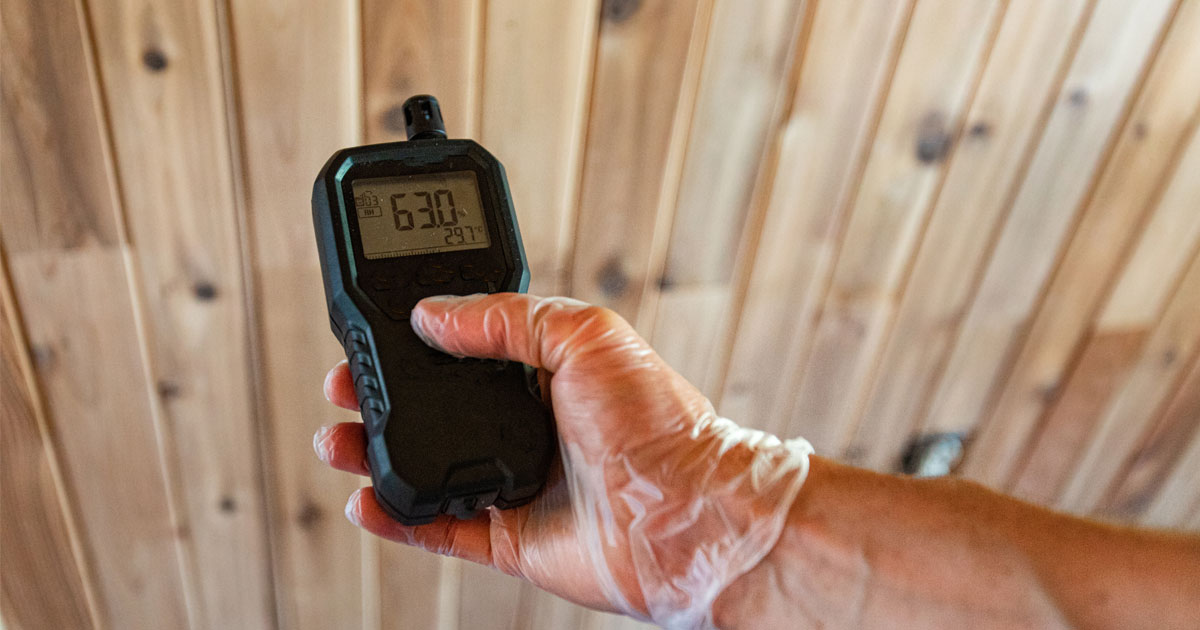
A PID photoionization detector can be used as a field screening tool for certain airborne compounds. It provides real-time readings that help identify areas of concern, but it generally cannot identify individual VOCs on its own.
4. Analyze Samples in a Laboratory
Laboratories may use gas chromatography-mass spectrometry, including GC-MS VOC testing, to separate, identify, and quantify individual compounds in collected air samples. This provides more specific information than a general consumer air-quality reading.
5. Review the Results
An environmental professional can then evaluate the findings in the context of the property and the purpose of the testing. Professional indoor air quality testing allows the sampling and analysis to be customized to the conditions being investigated rather than relying on the same measurement for every property.
When Should You Consider Professional VOC Testing?

Professional testing may be appropriate when the source of an odor or indoor air concern is not immediately apparent.
These warning signs can also point to broader air quality concerns. In our previous blog, we covered the signs your NYC apartment needs air quality testing and other concerns involving renovations, moisture, ventilation, and airborne contaminants.
You may consider testing when:
- Persistent chemical or unusual odors are present.
- There are concerns about ongoing VOC off-gassing.
- Symptoms appear to occur primarily inside a particular building.
- New flooring, furniture, cabinetry, or other materials have recently been installed.
- A property has recently undergone painting, renovation, or construction.
- A chemical spill, solvent, fuel, or other source is suspected.
- Previous screening indicates that additional investigation may be appropriate.
Someone searching for what is a VOC or VOC testing near me may find everything from home monitors and DIY kits to professional testing services. Home devices can provide general screening information, but professional testing goes further by selecting sampling and laboratory methods tailored to the specific concern.
Reducing chemical use, increasing ventilation, following manufacturer instructions, and selecting suitable low-VOC products are among the general strategies commonly considered when looking at how to reduce VOCs in your home. However, when there is a specific indoor air concern, testing can provide better information about what is present before decisions are made.

Get Answers About Your Indoor Air
Unusual odors, recent renovations, or ongoing air quality concerns may be a reason to investigate further. BEP Environmental provides professional testing tailored to the conditions of your property.
VOC Testing in NYC
Indoor environmental issues can arise in apartments, homes, offices, commercial properties, and other buildings throughout New York City. Professional VOC testing NYC property owners request can help investigate suspected chemical emissions, unusual odors, renovation-related concerns, and other indoor air quality issues.
BEP Environmental provides professional VOC testing and indoor air quality testing to help property owners better understand conditions inside their buildings. A tailored testing approach assesses the property, suspected contaminants, and reason for the investigation, providing more useful information than a general air-quality monitor alone.
If you are concerned about VOCs or other indoor air contaminants, professional testing can help determine the appropriate next steps.
Frequently Asked Questions
What are VOCs and why are they dangerous?
Volatile organic compounds can enter indoor air from building materials, furnishings, cleaning products, fuels, solvents, and many other sources. Not every VOC carries the same level of concern. The specific chemical, its concentration, and the duration of exposure all matter. Some may cause short-term irritation or other symptoms, while certain VOCs are linked to more serious health concerns with sufficient exposure.
What does VOC testing detect?
VOC testing can detect specific volatile organic compounds in indoor air when appropriate sampling and analytical methods are used. Depending on the requested analysis, laboratory testing may identify individual compounds and measure their concentrations rather than provide only a general total VOC reading.
How is VOC testing performed?
Professional testing requires assessing the property and selecting an appropriate sampling method based on the concern. Air may be collected using canisters, sorbent media, or other methods and sent to a qualified laboratory for analysis. Field instruments may also be used for screening when appropriate.
How do you test indoor air for VOCs?
Professional VOC air testing starts with choosing a sampling method that fits the concern being investigated. Air samples are collected inside the property and may then be sent to a laboratory to determine what is present and measure the concentrations.
Can VOCs cause long-term health issues?
Certain chemicals have been linked to long-term health effects, but the level of risk varies from one compound to another. How much of the chemical is present and how often or how long exposure occurs are important factors. Laboratory testing can identify and measure specific compounds, while potential health risks should be considered using appropriate health-based guidance.
How much does VOC testing cost?
The cost of volatile organic compounds testing depends on factors such as the number of sampling locations, sampling method, laboratory analysis, property conditions, and the compounds being investigated. A professional can determine the appropriate scope before providing pricing for a specific property.
Do I need professional VOC testing or a home kit?
Home monitors and kits can be useful for basic screening, but they may not indicate which specific compounds are causing the reading. Professional VOC testing is a better fit when you are investigating a persistent odor, suspected chemical source, or other specific indoor air concern and need compound-specific laboratory results.
Where does BEP Environmental provide VOC testing?
BEP Environmental provides testing throughout New York City and Long Island, including Manhattan, Brooklyn, Queens, the Bronx, Staten Island, Nassau County, and Suffolk County.